



86-92% Polyester + 8-14% Spandex: The Perfect Ratio for Athletic Wear
This specific blend of 86-92% polyester and 8-14% spandex represents the ultimate choice for high-performance athletic wear. This precise ratio delivers an unparalleled balance of flexibility, durability, and comfort, qualities essential for athletes. This engineered athletic fabric composition optimizes performance across diverse athletic demands, empowering individuals to achieve their best.
Key Takeaways
- The mix of 86-92% polyester and 8-14% spandex is best for sports clothes. It gives great stretch, strength, and comfort.
- Polyester helps keep you dry. It moves sweat away from your skin quickly. This makes it good for hard workouts.
- Spandex adds stretch to clothes. It lets you move freely. It also helps clothes fit snugly and support your muscles.
- More polyester means better sweat control. More spandex means more stretch and muscle support. Different sports need different amounts.
- Take care of these clothes by washing them in cold water. Do not use fabric softener. This helps them last longer and work well.
The Core Benefits of This Athletic Fabric Composition
Unrivaled Performance and Comfort
This specific polyester-spandex blend offers athletes an exceptional combination of performance and comfort. Manufacturers achieve this through meticulous yarn manufacturing, where spandex fibers blend with others to create elastic yarns. This process directly influences the fabric's elasticity and overall comfort. The weaving process further transforms these yarns into fabrics, with knitted options often providing superior elasticity, ideal for garments that fit closely. Finally, finishing processes like pre-shrinking and shaping ensure dimensional stability and maintain the fabric's appearance.
Optimizing the blend ratio of polyester and spandex significantly improves elasticity, comfort, and wearability. Advanced weaving techniques enhance fabric performance, while integrating tactile qualities, such as a silky smooth finish, elevates high-end sportswear and casual clothing. This blend also features enhanced moisture-wicking capabilities, quick-drying properties, and improved air permeability, crucial for activewear.
Consider the comparative advantages of this blend:
| Feature | Polyester-Spandex | Cotton-Spandex | Nylon-Spandex |
|---|---|---|---|
| Moisture-Wicking | ★★★★★ | ★★☆☆☆ | ★★★★☆ |
| Breathability | ★★★★☆ | ★★★☆☆ | ★★★★☆ |
| Stretch & Recovery | ★★★★☆ | ★★★★☆ | ★★★★★ |
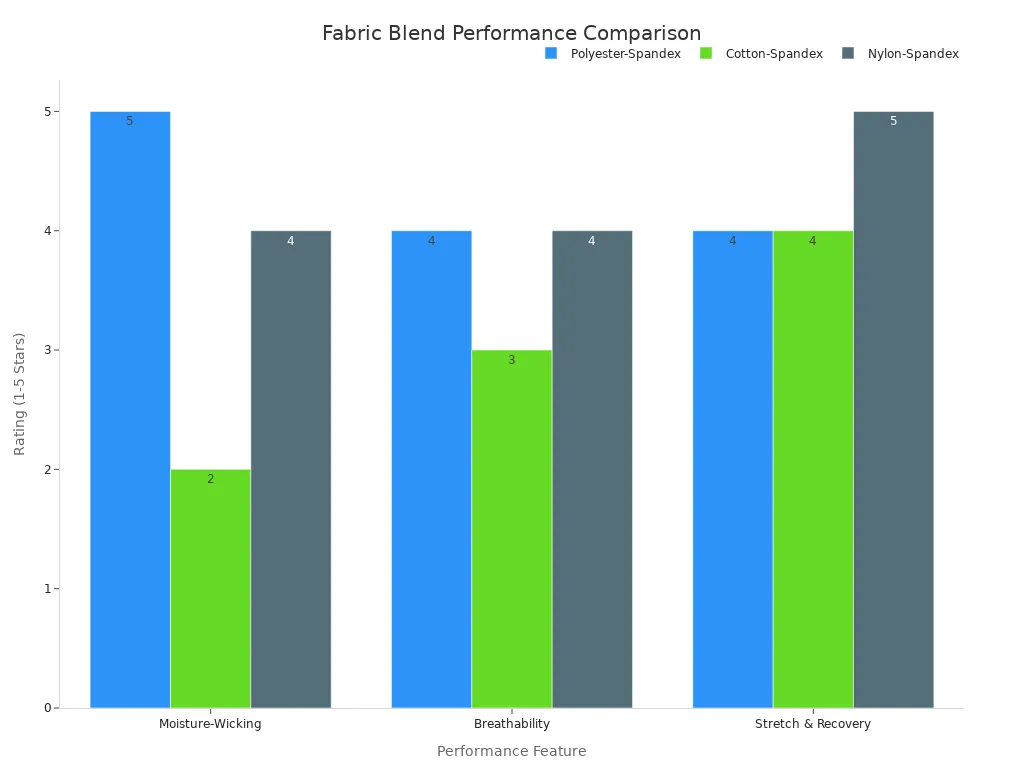
User testing consistently demonstrates the blend's superiority. For example, a 12% spandex mesh tee dried 27% faster than a cotton-only version after a 10K run. Users also ranked it 9/10 for post-workout comfort, highlighting its practical benefits.
Engineered for Demanding Workouts
This athletic fabric composition is specifically engineered to withstand the rigors of demanding workouts. Its inherent durability and resilience make it a preferred choice for high-intensity activities. The fabric exhibits minimal shrinkage and excellent colorfastness, even after numerous washes.
| Blend Type | Shrinkage After 20 Washes (%) | Colorfastness to Washing (Scale 1–5) | Observed Surface Wear |
|---|---|---|---|
| 85/15 | 2–4% | 4–5 | Light pilling in flex zones |
| 90/10 | <1.5% | 4–5 | Minimal wear or surface changes |
The blend's resistance to abrasion further underscores its suitability for athletic wear.
| Blend | Abrasion Cycles to Reach Grade 3 Pilling | Average Friction Tolerance Rating |
|---|---|---|
| 85/15 | 8,000–10,000 cycles | Moderate (subject to finishing) |
| 90/10 | 12,000–15,000 cycles | High (with tighter fiber packing) |
The spandex content provides crucial stretch and recovery properties, essential for dynamic movements. Different garments utilize varying spandex percentages to achieve optimal performance.
| Garment Type | Spandex Content | Stretch Percentage | Recovery Time |
|---|---|---|---|
| Running Tights | 15–20% | 100% | ≤10 seconds |
| Compression Gear | 20–30% | 200% | ≤5 seconds |
| Yoga Pants | 15–20% | 400% | ≤2 seconds |
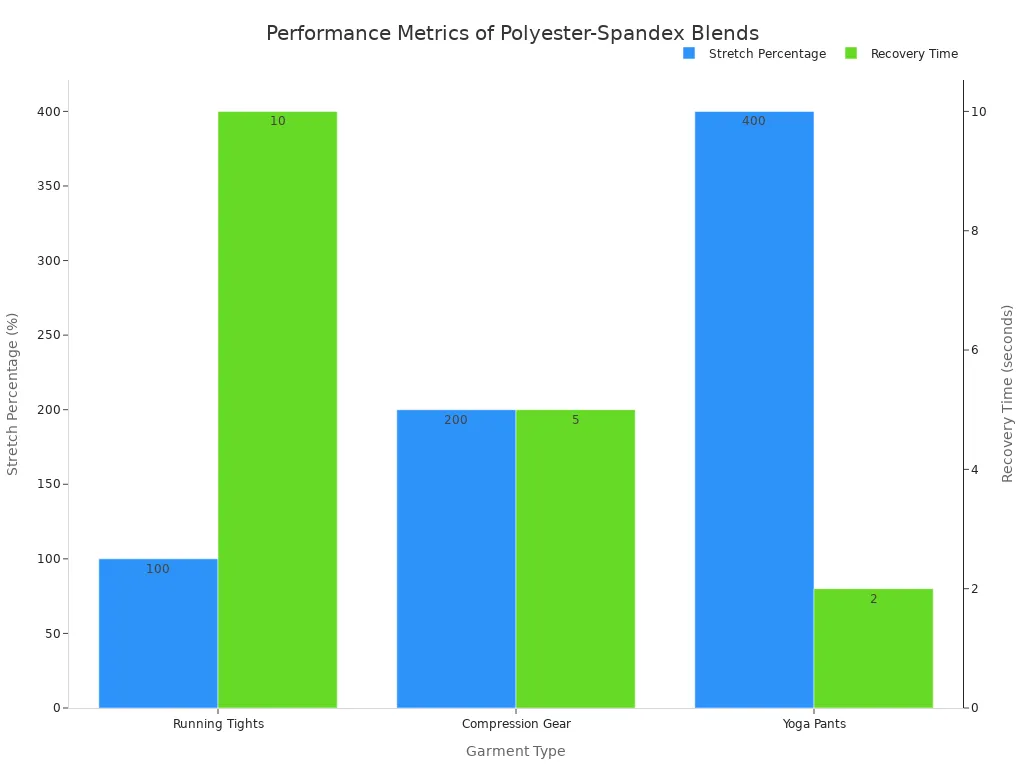
This engineered elasticity ensures garments move with the body, providing support without restricting motion. The rapid recovery time means the fabric quickly returns to its original shape, maintaining fit and compression throughout intense physical activity.
Polyester's Dominance in Athletic Fabric Composition
Moisture-Wicking and Quick-Drying Properties
Polyester stands as a cornerstone in modern athletic fabric composition due to its exceptional moisture-wicking and quick-drying capabilities. Its naturally hydrophobic nature means it repels water. This property prevents the fabric from absorbing moisture, instead forcing it to move along the fiber surfaces. This design efficiently draws sweat away from the skin. Furthermore, manufacturers engineer polyester into complex weaves that enhance capillary action. This process effectively pulls moisture to the fabric's exterior.
Polyester's effectiveness in moisture-wicking also benefits from specialized yarn constructions and micro-denier polyester. These innovations increase the capillary count within the fabric. This significantly improves the speed at which moisture wicks away. Polyester microfibers are engineered for optimal moisture management. They create more surface area per gram than natural fibers, which enables faster capillary action. Its inherent hydrophobic nature prevents moisture absorption into the fiber itself. This directs all moisture to the fabric's exterior. Engineered polyester fibers can transport moisture three to five times faster than cotton, which absorbs moisture into its fibers. This rapid moisture transfer ensures athletes stay dry and comfortable during intense activity.
Durability and Shape Retention
Polyester also offers superior durability and excellent shape retention, crucial attributes for high-performance athletic wear. This synthetic fiber resists stretching, shrinking, and wrinkling, maintaining the garment's original form even after repeated use and washing. Its strong fibers withstand abrasion and tearing, making it ideal for demanding sports environments. Polyester garments hold their color well, resisting fading from sunlight and frequent laundering. This resilience ensures that athletic apparel made with a high percentage of polyester retains its aesthetic appeal and functional integrity over time. Athletes rely on this consistent performance for long-lasting gear.
Spandex: The Essential Stretch in Athletic Fabric Composition

Unrestricted Movement and Flexibility
Spandex is a crucial component in modern athletic wear, primarily for its exceptional elasticity. This synthetic fiber allows garments to stretch significantly, providing athletes with unrestricted movement. Pure spandex can stretch an impressive 500-700% of its original length without breaking. When blended into fabrics, typically with 15-20% spandex content, it offers optimal freedom of movement. This superior stretch capacity enables dynamic movement adaptation, supporting multi-directional flexibility. It prevents resistance points that could restrict circulation or cause chafing during repetitive motions. The unique "molecular springs" within spandex allow the fabric to snap back to its original shape. This ensures excellent shape memory and recovery, which is vital for maintaining garment integrity throughout athletic activities.
Compression and Support Benefits
Beyond flexibility, spandex contributes significantly to the compression and support benefits found in high-performance athletic wear. The inherent elasticity of spandex allows fabrics to exert gentle, consistent pressure on the body. This compression offers several physiological advantages for athletes.
- Compression garments likely reduce muscle oscillatory properties, meaning they minimize muscle vibration during impact.
- They may lead to potential increases in arterial blood flow, enhancing oxygen delivery to working muscles.
- These garments have a positive effect on sensorimotor systems, improving proprioception.
- Athletes often report reduced perceptions of muscle soreness and pain following exercise when wearing compression.
- Compression sleeves can increase tissue oxygen saturation, further supporting muscle function.
- The mechanical pressure applied to soft tissue helps decrease muscle oscillation and soft tissue vibration, which can reduce muscle tissue damage and potentially aid in injury prevention. This makes spandex a key element in advanced athletic fabric composition.
Decoding Polyester Percentages: 86% to 92%
The specific percentage of polyester within the 86-92% range significantly influences the fabric's performance characteristics. Manufacturers carefully select these ratios to optimize garments for various athletic demands. Understanding these nuances helps in choosing the most effective apparel for specific activities.
90-92% Polyester for Enhanced Moisture Management
A higher polyester content, specifically in the 90-92% range, prioritizes superior moisture management. This composition excels at keeping athletes dry and comfortable during intense physical exertion. Polyester's inherent properties, combined with advanced treatments, drive this performance. For instance, hydrophilic treatments, applied through plasma or pad-batch methods, impart permanent wicking characteristics. These treatments boost moisture uptake by 25% for sportswear and can last over 50 washes.
This higher polyester blend demonstrates excellent breathability and moisture-wicking capabilities.
| Fiber / Blend | Breathability | Moisture Wicking |
|---|---|---|
| 100% Polyester | ★★★★★ | ★★★★★ |
| Nylon–Spandex (85/15) | ★★★★ | ★★★★ |
| Cotton–Spandex (95/5) | ★★★★ | ★★★ |
| Polyester–Spandex (90/10) | ★★★★★ | ★★★★★ |
| Acrylic–Spandex (90/10) | ★★★ | ★★ |
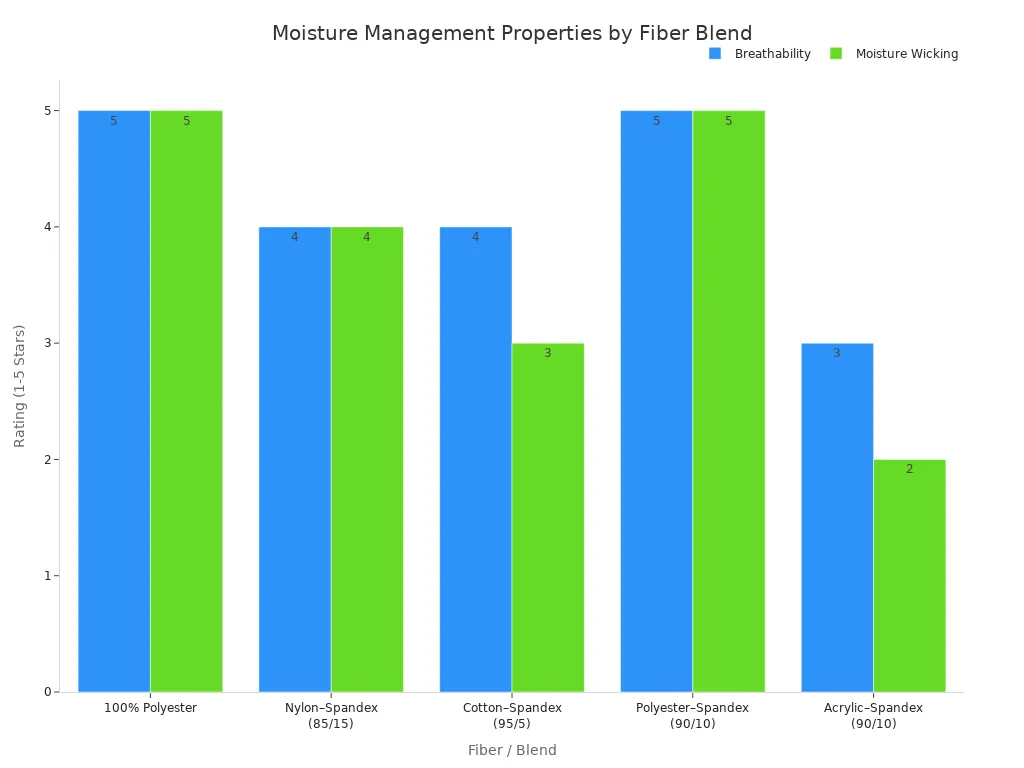
Polyester-spandex consistently achieves the lowest Water Vapor Resistance (Ret) values, indicating superior vapor transmission and maintaining cool-dry comfort. In SzoneierFabrics’ CoolDry™ polyester–spandex knits, wicking tests (AATCC 195) showed surface dry times under 6.5 seconds. This compares favorably to 18 seconds for nylon–spandex blends, demonstrating polyester’s superior sweat evaporation under thermal load. Polyester, with its smooth nonpolar surface and capillary filament cross-sections, remains the benchmark for wicking-driven comfort in activewear.
86-89% Polyester for Balanced Performance
Garments featuring 86-89% polyester offer a balanced performance profile. This slightly lower polyester content allows for a marginally higher spandex percentage, enhancing flexibility and compression without significantly compromising moisture management. This blend provides a versatile option for various activities. It delivers reliable wicking properties while offering increased stretch and support. Athletes find this ratio suitable for workouts requiring both effective sweat management and dynamic movement. This composition strikes an optimal balance between durability, comfort, and functional elasticity.
Understanding Spandex Ranges: 8% to 14%
The percentage of spandex in athletic fabric composition directly dictates the garment's flexibility, compression, and overall feel. Manufacturers carefully select these ranges to optimize apparel for specific athletic needs. Understanding these variations helps athletes choose the most effective gear for their training and performance.
8-10% Spandex for Gentle Flexibility
Fabrics containing 8-10% spandex offer a comfortable level of flexibility. This blend allows for natural movement without applying excessive compression. It provides enough stretch for dynamic actions while maintaining a soft feel against the skin. Athletes find this ratio suitable for various activities where comfort and freedom of movement are paramount. The fabric recovers its shape well after stretching, ensuring consistent fit.
This spandex content is ideal for:
- Intense sports and high-intensity activities, such as tight-fitting short-sleeved sports shirts and tight-fitting running tops.
- Sports tights.
- Slim-fit sports T-shirts.
- Lightweight and breathable hiking pants.
This range ensures apparel moves with the body, supporting activity without restriction.
12-14% Spandex for Maximum Stretch and Compression
A higher spandex content, specifically 12-14%, delivers maximum stretch and significant compression. This blend provides a more supportive fit. It enhances muscle support and reduces muscle vibration during strenuous exercise. Garments with this spandex level offer superior elasticity. They conform closely to the body's contours. This close fit aids in improving blood circulation and reducing muscle fatigue. Athletes benefit from the enhanced proprioception this compression provides. It allows for precise movements and a feeling of security during intense workouts. This ratio is particularly effective for compression wear and highly dynamic athletic apparel. It ensures the fabric maintains its integrity and supportive qualities through extreme movements.
Tailoring the Athletic Fabric Composition for Specific Activities
The optimal athletic fabric composition varies significantly depending on the specific activity. Manufacturers carefully engineer blends to meet the unique demands of different sports and workouts. This ensures athletes receive maximum performance, comfort, and support from their apparel.
High-Intensity Training and Running Apparel
High-intensity training and running demand fabrics that manage moisture effectively, provide dynamic flexibility, and withstand rigorous activity. Apparel for these activities requires a precise balance of properties to keep athletes dry, comfortable, and unrestricted. Polyester excels at moisture-wicking, efficiently pulling sweat away from the body for rapid evaporation. This keeps wearers dry and comfortable during intense workouts. Polyester also resists stretching, shrinking, and wrinkling, contributing to garment durability.
Running apparel prioritizes several key fabric properties to enhance performance and reduce fatigue:
- Polyester: This material efficiently pulls sweat away from the body for quick evaporation. It keeps wearers dry and comfortable. Polyester is also highly resistant to stretching, shrinking, and wrinkling, ensuring durability.
- Nylon: Nylon efficiently draws moisture away from the skin for quick evaporation, promoting coolness and dryness. It offers flexibility and stretchability for a wide range of motion. Nylon also possesses quick-drying properties.
- Spandex (Elastane): Spandex provides exceptional flexibility and mobility, allowing free movement without restriction. Manufacturers often blend it with other fabrics to create form-fitting and supportive garments. This optimizes comfort and enhances performance.
- Blended Materials (e.g., Polyester-Spandex, Nylon-Spandex): These combinations merge moisture-wicking prowess with flexibility, breathability, and support. They maximize benefits and minimize drawbacks of individual fabrics.
- Compression Fabrics: Typically a blend of spandex and nylon, these fabrics offer a snug fit. They reduce muscle vibrations, contributing to reduced fatigue and strain. They also enhance blood flow for improved oxygen delivery to muscles.
Different apparel types require specific blend ratios for optimal performance and comfort. For instance, T-shirts often use a 95% polyester / 5% spandex blend for a comfortable fit with mild stretch. Leggings and yoga pants, which demand high stretch and shape retention, typically feature blends like 90% polyester / 10% spandex or 88% polyester / 12% spandex. This careful tailoring ensures the garment supports the athlete's movements without hindrance.
Yoga, Pilates, and Flexibility-Focused Garments
Yoga, Pilates, and other flexibility-focused activities require garments that offer exceptional stretch and unrestricted movement. The fabric must move seamlessly with the body through deep stretches and dynamic poses. A technical blend of nylon and Lycra/Spandex is ideal for these garments. Compositions like 80% Nylon / 20% Lycra or 76% Nylon / 24% Lycra/Spandex provide essential 4-way stretch. This ensures unrestricted movement and squat-proof opacity. It also delivers moisture-wicking performance.
Technical nylon, especially Tactel nylon, offers superior benefits compared to polyester for these applications. It dries faster, resists wear and pilling more effectively, and feels softer against the skin. High-quality Pilates clothing also benefits from high-compression technical fabrics. These fabrics feature 4-way stretch and 20-24% Lycra content. This provides optimal compression without restricting movement.
Specific fabric technologies exemplify these benefits:
| Fabric Technology | Composition | Best For | Key Feature |
|---|---|---|---|
| CorEnabl | 80% Nylon 20% Lycra | Yoga Leggings, Support Tanks | Ultimate 4-way stretch, squat-proof opacity |
| Enlux | 76% Tactel Nylon 24% Lycra | Multi-sport versatility | Balanced performance across all activities |
| Energize | 87% Tactel Nylon 13% Spandex | Hot Yoga, Workout Tees, Bike Shorts | Dries 8x faster, 3x more resistant, 2x softer |
Four-way stretch spandex is essential for yoga wear. It moves in all directions—side-to-side, up-and-down, and diagonally. This provides unrestricted motion. It allows for a full range of motion, ideal for deep stretches, inversions, and dynamic poses. This fabric also offers shape retention, resisting sagging. It provides enhanced durability, withstanding frequent stretching without losing elasticity. This type of fabric suits dynamic yoga, Pilates, and Barre where flexibility is key.
Team Sports and Everyday Activewear
Team sports apparel requires a blend of durability, freedom of movement, and effective moisture management. Everyday activewear, while less demanding, still benefits from comfort, versatility, and ease of care. Fabric composition significantly impacts the performance and comfort of garments designed for team sports. Lightweight, stretchy, and moisture-wicking fabrics offer unparalleled comfort and unrestricted movement. They draw sweat away from the body, keeping the wearer dry.
Team sports garments often incorporate additional features:
- Antimicrobial properties: Treatments like silver and Chitosan inhibit the growth of odor-causing bacteria. This keeps garments fresh during intense workouts.
- Mold and stain resistance: DWR (Durable Water Repellent) finishes help repel liquids and prevent stains. This maintains garment appearance and functionality in damp conditions.
- Thermoregulation and breathability: Performance fabrics adapt to body temperature. They prevent overheating and promote airflow for enhanced ventilation.
- Stretchability: This provides flexibility and freedom of movement. It allows the fabric to conform to the body's motion without restriction.
- Warmth without weight: Technologies in fabrics like Polartec Alpha Direct, High Loft, and Thermal Pro Fleece offer warmth with lightweight layers.
For everyday activewear, skin-safe fabrics are paramount. These include advanced synthetics, bamboo, and merino wool. They wick away sweat, allow breathability, and prevent chafing and allergic reactions. This leads to improved athlete focus, mobility, and overall performance. Moisture-wicking fabrics pull sweat away from the skin to prevent irritation and bacteria buildup. This keeps the skin drier and minimizes friction. Breathability ensures proper airflow, reducing discomfort during intense activity by allowing heat and moisture to escape. Certifications like OEKO-TEX® Standard 100 guarantee fabrics are free from harmful substances, enhancing safety and comfort for daily wear.
The Science Behind the Fabric's Feel and Longevity
Lightweight Comfort and Softness
The 86-92% polyester and 8-14% spandex blend offers exceptional lightweight comfort and a soft feel. Modern polyester, especially when processed into microfiber or blended with natural fibers, feels soft, lightweight, and breathable. Polyester clothing feels smooth, sleek, and cool against the skin. Spandex, or Lycra, in these blends provides smooth, second-skin fits. These fits contour perfectly to the body, offering flattering yet comfortable wear that moves with the wearer. Lycra and spandex also offer freedom of movement without restriction, perfect for activities requiring flexibility. They ensure no sagging or bagging after hours of wear, maintaining shape during rigorous activities.
| Factor | Polyester (and Blends) | Spandex (in Blends) |
|---|---|---|
| Comfort | Soft, lightweight, customizable | Adds stretch, enhances comfort |
| Moisture-wicking | Excellent, keeps you cool and fresh | Improves fit and flexibility |
| Durability | Strong, wrinkle-resistant, easy to wash | Adds elasticity and durability |
| Feel | Soft, smooth, and lightweight | Super stretchy, hugs the body |
While polyester offers general comfort, spandex provides a very comfortable, soft feel against the skin. Polyester has low elasticity, mainly retaining its shape, whereas spandex boasts high elasticity, stretching significantly. Both contribute to good breathability, and spandex offers excellent moisture-wicking properties.
Maintaining Fabric Integrity and Performance
Proper care significantly extends the life and performance of athletic wear made from this blend. Always check the garment label first, especially for spandex blends that cannot handle high heat. Wash these items in cold water with a gentle detergent to preserve elasticity and wicking properties. Skipping fabric softener is crucial, as it can clog the fibers and reduce their effectiveness. Air-drying is the preferred method when possible; it avoids shrinking or warping, particularly for delicate items like mesh.
Athletes can also implement several best practices for garment care:
- Use a mesh bag to protect delicate items during washing.
- Add baking soda to the wash cycle to battle stubborn odors.
- Rinse garments immediately post-workout to prevent sweat from setting in.
- Choose a detergent suitable for athletic wear.
- Avoid bleach, as it can damage the fabric fibers and compromise performance.
These simple steps help maintain the fabric's integrity, ensuring the apparel continues to deliver optimal performance and comfort over time.
The 86-92% polyester and 8-14% spandex blend represents the pinnacle of athletic fabric composition. This precise ratio consistently delivers superior performance, comfort, and durability for all athletic pursuits. Athletes find empowerment in selecting the optimal blend within this range. This engineered fabric composition truly optimizes their performance across diverse athletic demands.
This blend stands as the ultimate choice for high-performance athletic wear.
FAQ
What makes the 86-92% polyester and 8-14% spandex blend ideal for athletic wear?
This blend offers an optimal balance of flexibility, durability, and comfort. Polyester provides excellent moisture-wicking and quick-drying properties. Spandex adds crucial stretch and shape retention. Together, these materials support peak athletic performance across various activities.
How should athletes care for garments made from this fabric blend?
Athletes should wash these garments in cold water with a gentle detergent. Avoid fabric softeners, as they can reduce the fabric's wicking capabilities. Air-drying is preferable to maintain elasticity and prevent shrinking. Always check the garment's specific care label.
Does the exact percentage of polyester or spandex significantly impact performance?
Yes, even small percentage changes matter. Higher polyester content (90-92%) enhances moisture management. A greater spandex percentage (12-14%) provides maximum stretch and compression. Manufacturers tailor these ratios for specific athletic demands, optimizing garment function.
Is this fabric blend suitable for all types of athletic activities?
This versatile blend suits a wide range of activities. For high-intensity training, it offers superior moisture control. For yoga and Pilates, it provides unrestricted movement. Team sports and everyday activewear also benefit from its durability and comfort.
Why is polyester preferred over natural fibers for athletic wear?
Polyester's hydrophobic nature repels water, efficiently wicking sweat away from the skin. It dries quickly, keeping athletes comfortable. Natural fibers like cotton absorb moisture, becoming heavy and damp. Polyester also offers superior durability and shape retention.