



Climbing Apparel Fabrics What You Need to Know
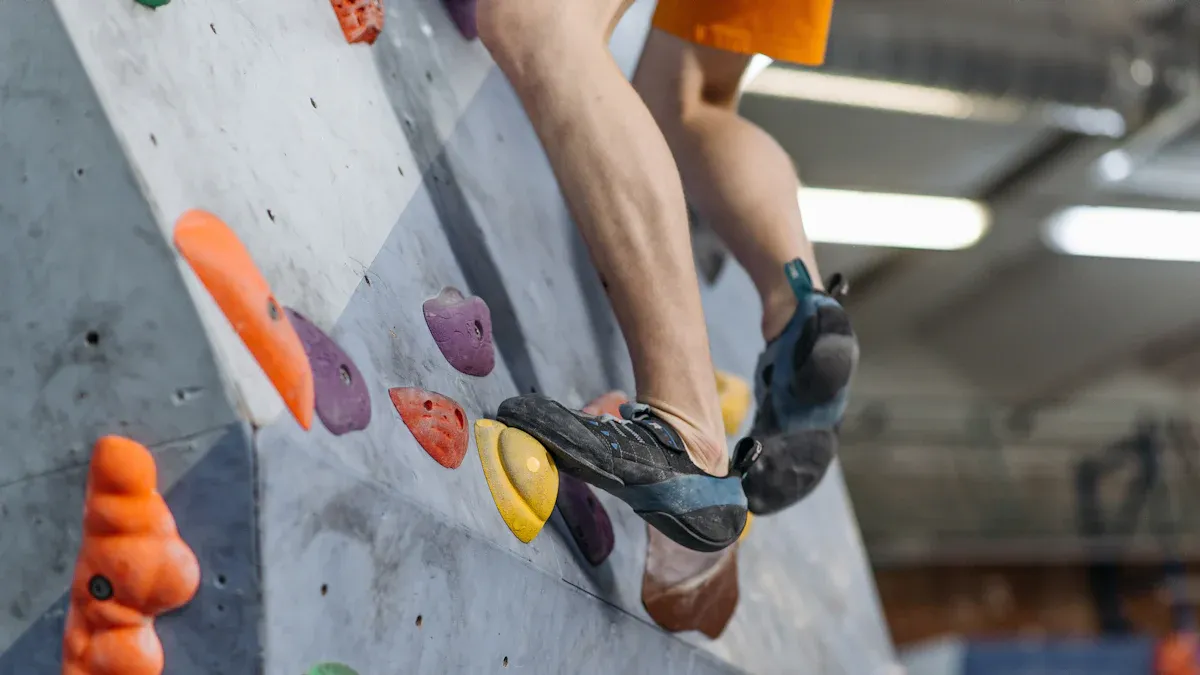
The best fabric choices for climbing apparel prioritize a balance of durability, breathability, moisture-wicking, stretch, and comfort. These properties enhance performance and safety on the rock. Professional climbers consistently highlight moisture-wicking for effective sweat management, breathability for optimal temperature regulation, and abrasion resistance against rock and gear. Different climbing settings dictate specific fabric needs. Outdoor bouldering and trad climbing demand durability against abrasion and UV exposure. Competitive environments benefit from tight-fitting, aerodynamic apparel. High-altitude and winter climbs require thermal layers for effective heat retention.
Key Takeaways
- Good climbing clothes help you climb better and stay safe. They need to be strong, let your skin breathe, and move sweat away from your body.
- Synthetic fabrics like nylon and polyester are great for climbing. They are strong, dry fast, and stretch well. This helps you move freely and stay dry.
- Merino wool is a natural choice. It keeps you warm when it's cold and cool when it's hot. It also helps stop bad smells.
- Do not wear cotton when climbing. Cotton gets wet and stays wet. This can make you cold and uncomfortable.
- Different types of climbing need different clothes. Always pick fabrics that fit your climbing style and the weather.
Understanding Key Fabric Properties for the Best Fabric Choices for Climbing Apparel
Durability and Abrasion Resistance
Durability stands as a critical factor for climbing apparel. Fabrics must withstand constant friction against rock surfaces, gear, and harsh outdoor elements. High tear strength, the force required to initiate a tear, and tear resistance, the fabric's ability to prevent a tear from spreading, are essential properties. Manufacturers often utilize specialized materials like Ripstop fabrics, which feature thicker threads to prevent tears, and Cordura, a high-tenacity nylon known for its robustness. Advanced fibers such as Dyneema (UHMWPE), Kevlar, and Spectra also offer exceptional strength against tearing, making them ideal for demanding applications.
The weave of a fabric significantly influences its abrasion resistance. Tightly constructed fabrics with high yarn counts provide superior protection against rubbing and chafing. Smooth, flat weaves like plain and twill generally outperform looser weaves. Denim, with its thick, tightly woven cotton twill, and canvas, a rugged cotton fabric, both demonstrate excellent abrasion resistance. Climbing companies, including Black Diamond, prioritize durability in product development, recognizing its importance for both performance and sustainability. Patagonia's H₂No® Performance Standard exemplifies this commitment, involving rigorous lab and field tests for long-term durability, including tensile strength, ripping resistance, and abrasion resistance. These measures ensure the best fabric choices for climbing apparel meet the rigorous demands of the sport.
Breathability and Sweat Management
Breathability is paramount for comfort and performance during strenuous climbing activities. Breathable fabrics allow air to circulate freely through the garment, preventing the buildup of heat and moisture close to the skin. This ventilation helps regulate body temperature, keeping climbers from overheating during ascents and preventing chilling during rests. Effective breathability works in conjunction with sweat management, ensuring the body remains in an optimal thermal state.
Moisture-Wicking for Dryness
Moisture-wicking fabrics actively draw sweat away from the skin. This process, primarily through capillary action, moves moisture from the fabric's inner surface to its outer layer, where it can evaporate more readily. Staying dry is crucial for comfort and preventing hypothermia, especially in cooler conditions. Fabric treatments enhance these wicking capabilities. Hydrophilic finishes increase a fabric's attraction to water, improving absorption and transport. Ionic treatments modify fiber surface charges, leading to quicker moisture uptake. While not directly wicking, Durable Water Repellent (DWR) coatings applied to individual yarns prevent saturation, allowing the underlying wicking properties to function effectively.
Stretch for Unrestricted Movement
Climbers demand a full range of motion. Fabric stretch directly enables dynamic movements. Spandex, also known as Lycra or Elastane, provides significant elasticity. Apparel manufacturers often blend Spandex with other fibers. This blend offers both essential stretch and necessary durability. Mechanical stretch also contributes to flexibility. This type of stretch comes from the fabric's specific weave or knit structure. It allows some give without relying on elastic fibers. Unrestricted movement is crucial for reaching distant holds. It also prevents fabric from hindering complex body positions. Good stretch enhances overall performance and reduces muscle fatigue during long climbs.
Weight and Packability
Apparel weight directly impacts a climber's performance. Lighter garments reduce the overall load. This becomes especially important on long routes or multi-pitch climbs. Less weight translates to less energy expenditure. Packability refers to how small a garment compresses. Highly packable items save valuable space in a backpack. Climbers often carry multiple extra layers. These layers must fit efficiently into limited pack space. Lightweight synthetic fabrics excel in packability. They offer warmth or protection without adding significant bulk. This makes them ideal for fast-and-light alpine ascents.
Weather Resistance
Climbing environments are inherently unpredictable. Weather resistance protects climbers from harsh elements. This protection includes defense against wind, rain, and snow. Water-repellent fabrics effectively shed light moisture. They often feature a Durable Water Repellent (DWR) coating on the surface. Water-resistant fabrics offer more substantial protection. They can withstand moderate rain for extended periods. Waterproof fabrics provide the highest level of defense. They utilize specialized membranes or coatings to block water completely. Wind resistance prevents chilling. It blocks cold air from penetrating the fabric layers. These protective properties are vital for climber safety. They help maintain core body temperature in harsh, changing conditions. Selecting the best fabric choices for climbing apparel often involves carefully balancing these protective features with other performance needs.
Synthetic Fabrics: Top Choices for Climbing Apparel Performance
Synthetic fabrics form the backbone of modern climbing apparel, offering a powerful combination of performance attributes essential for navigating challenging terrain. These engineered materials provide superior durability, efficient moisture management, and crucial elasticity, all while remaining lightweight and easy to maintain. Climbers often choose synthetic garments because they generally cost less money compared to high-performance natural materials used in technical garments.
Synthetic clothing excels in several key areas. It offers exceptional durability and strength; for instance, nylon is remarkably strong and durable despite its light weight, possessing high tensile strength to resist tension and stretching without damage. Polyester also demonstrates strength and stiffness, effectively standing against wear and tear. These fabrics are also renowned for their moisture-wicking and quick-drying capabilities. Materials like polyester and polypropylene efficiently move sweat away from the skin to the fabric's surface, where it quickly evaporates, keeping the wearer dry, cool, and comfortable. Nylon also provides moderate moisture-wicking properties. Furthermore, synthetic fabrics, particularly spandex and polyester, offer natural elasticity and flexibility, allowing for unrestricted movement and a snug fit without wear or tear. This elasticity is crucial for dynamic climbing movements. Synthetic fabrics are also lightweight, a critical factor for demanding activities like climbing. Finally, they offer convenience; synthetic fabrics are generally easy to maintain, resistant to wrinkles, machine washable, color-fast, and dry quickly, requiring less effort to retain freshness.
Nylon (Polyamide)
Nylon, a polyamide, stands as a cornerstone synthetic fiber in climbing apparel due to its exceptional strength-to-weight ratio and abrasion resistance. Manufacturers frequently select nylon for its ability to withstand the rigorous demands of climbing. It exhibits high tensile strength, meaning it resists breaking under tension.
| Metric | Specification |
|---|---|
| Breaking Strength | ≥ 25 kN (ASTM D6775) |
| Elongation at Break | 18–22 % |
| Abrasion Resistance | > 20 000 cycles (ASTM D3884) |
| UV Retention (500 h) | ≥ 80 % |
These specifications highlight nylon's robust nature. Its excellent abrasion resistance, often exceeding 20,000 cycles on the ASTM D3884 test, ensures garments can endure constant rubbing against rock and gear. Nylon also maintains a significant portion of its strength even after prolonged UV exposure, with retention rates typically at or above 80% after 500 hours.
| Property | Nylon (PA6/PA66) |
|---|---|
| Tensile Strength (MPa) | 80–85 |
| Abrasion Resistance | Excellent |
| Impact Strength | High |
Nylon's high impact strength further contributes to its durability, protecting against sudden forces. For fabrics like Nylon 600D Oxford, specific performance metrics demonstrate its resilience:
| Property | Nylon 600D Oxford |
|---|---|
| Abrasion Resistance (Martindale) | 18,200 cycles |
| Tear Strength (warp/weft) | 95 N / 80 N |
| UV Strength Retention (500h) | 72% |
| Water Repellency (AATCC 22) | 80 |
Beyond its strength, nylon also offers practical features like good air permeability, typically between 200–350 CFM (ASTM D737), which aids in breathability. It also boasts a water repellency of Grade 4 or higher (AATCC 22) and excellent colorfastness, ensuring garments retain their appearance over time.
Polyester
Polyester is another highly valued synthetic fabric in climbing apparel, often chosen for its distinct advantages, particularly in specific environmental conditions. While nylon excels in overall strength, polyester offers superior resistance to stretch and environmental factors, making it highly suitable for static tasks.
Polyester ropes, for example, maintain great resistance to stretch and environmental factors, making them ideal for static applications due to their sturdiness and consistency. This low stretch translates to superior load stability; polyester does not significantly change length under tension, which is crucial for applications requiring precise length, such as lifting equipment.
| Property | Polyester | Nylon |
|---|---|---|
| Stiffness | Typically stiffer | Less stiff |
| Durability | More durable | Less durable |
| Water Absorption | Absorbs 0.4% of its weight in water | Absorbs up to 5% of its weight in water |
| Strength (Wet) | Minimal loss of strength when wet | Gets weaker when wet |
| Elasticity | Very low stretch, used in super static ropes | Significantly more elastic |
| Caving Ropes | Often made of polyester | Less common for caving ropes due to wet weakness |
A key advantage of polyester is its consistent strength in wet conditions. It absorbs only about 0.4% of its weight in water, significantly less than nylon's 5%, meaning it experiences minimal loss of strength when wet. This makes polyester more reliable for activities where moisture is a factor. Polyester also shows excellent resistance to creep, holding its length and shape under tension with almost no permanent deformation over time. This property makes it perfect for static applications like rigging and guy lines. Furthermore, polyester has very low elasticity and low snapback recoil. When cut under tension, it stores less energy than nylon, and its reduced snapback greatly lessens the risk of injury or damage if the rope fails, making it favorable for static uses that rely on safety. Its high resistance to tensile fatigue also makes it a reliable choice for applications with cyclical loads, such as mooring lines and rigging systems.
Spandex (Lycra/Elastane)
Spandex, also known by its brand names Lycra or Elastane, is a synthetic fiber renowned for its exceptional elasticity. It plays a critical role in climbing apparel by providing the necessary stretch for unrestricted movement. Climbers require a full range of motion to execute complex maneuvers and reach distant holds, and spandex delivers this flexibility without hindering performance.
Apparel manufacturers frequently blend spandex with other fibers, such as nylon or polyester. This blending strategy combines the high elasticity of spandex with the durability and other performance characteristics of the base fabric. For instance, a nylon/spandex blend offers both the essential stretch for dynamic movement and the necessary abrasion resistance for longevity. Synthetic clothing, especially materials like spandex and polyester, offers natural elasticity and flexibility, allowing for unrestricted movement and a snug fit without wear or tear. This elasticity ensures garments move with the climber's body, preventing fabric from bunching or restricting during crucial moments. The elastic properties of spandex also contribute to a snug fit, which can offer aerodynamic advantages and reduce fabric flapping in windy conditions.
Polypropylene
Polypropylene is a lightweight synthetic fiber. It offers excellent performance characteristics for climbing apparel. Manufacturers often choose polypropylene for base layers and thermal garments. It provides warmth without adding significant bulk. This makes it ideal for layering systems in varying conditions.
Polypropylene excels in moisture management. It is a hydrophilic polymer, meaning it has an affinity for oil rather than water. This unique property makes it highly effective at wicking sweat away from the body. The fabric moves moisture from the skin to its outer surface. There, it evaporates quickly. This sweat-wicking property is very useful in cold weather. It keeps the skin dry, which is crucial for warmth. Dry skin prevents evaporative cooling and maintains core body temperature. Climbers rely on this feature to stay comfortable and safe during strenuous activity in chilly environments.
The fabric also boasts good insulation properties. It traps air close to the body, creating a thermal barrier. This insulation works even when the fabric gets damp. Polypropylene resists water absorption. It dries very quickly. This quick-drying nature is a significant advantage in unpredictable mountain weather. It prevents garments from becoming heavy and cold. Polypropylene also resists mildew and odors. This makes it a practical choice for multi-day trips. Its durability is also noteworthy. It withstands repeated washing and wear. This ensures a long lifespan for climbing apparel.
Natural Fabrics: Comfort and Considerations for Climbing Apparel
Natural fabrics offer unique benefits for climbing apparel, often prioritizing comfort and sustainable properties. While synthetics excel in many performance metrics, natural fibers provide distinct advantages, especially in specific conditions.
Merino Wool
Merino wool stands out as a premium natural fiber for climbing apparel. Rock climbers understand its significant benefits. For instance, if a climber is halfway up a cliff in a cotton t-shirt when the wind picks up, they will likely freeze due to trapped moisture. In contrast, wearing wool allows the fabric to breathe and wick moisture away from the body, preventing it from freezing. This significantly enhances a climber's energy levels and comfort, highlighting merino wool's superior performance in challenging climbing conditions. Merino wool offers several key advantages:
- Moisture-wicking: It keeps climbers dry during strenuous activities.
- Temperature Regulation: It adjusts to different temperatures, providing comfort on cold mountain trails and in summer heat.
- Warmth when damp: It maintains warmth even when wet, preventing cold in damp conditions.
- Breathability: It allows skin to breathe and manages moisture effectively.
- UV Protection: It offers some shielding from sun rays.
- Odor Resistance: Unlike synthetics, it resists developing unpleasant odors.
Cotton (When to Avoid)
Cotton, while comfortable for casual wear, presents significant drawbacks for active climbing. Climbers should generally avoid cotton for performance apparel.
- Cotton tracksuits absorb sweat and dry slowly, leading to dampness and a 'clammy feeling' during activity.
- Cotton picks up smells faster, requiring more frequent washing.
- Cotton is less effective at retaining warmth compared to wool.
- Cotton tracksuits tend to stretch and lose shape, sagging in the knees and elbows after consistent wear. Cotton workout clothing is unsuitable for outdoor activities and high-intensity workouts due to its inability to absorb or resist water. It is better suited for mild intensive activities, casual sports, warm-up and cool-down sessions, and athleisure. Its slow drying time and poor insulation when wet can lead to discomfort and even hypothermia in cooler conditions.
Blended Fabrics: Optimizing Climbing Apparel Performance
Blended fabrics represent a strategic approach to apparel design, combining different fibers to achieve a superior balance of performance characteristics. These blends often leverage the strengths of both synthetic and natural materials, creating garments that excel in durability, flexibility, moisture management, and comfort for climbers. Manufacturers engineer these fabrics to meet the specific demands of the sport, ensuring optimal performance on the rock.
Nylon/Spandex Blends
Nylon/spandex blends are a cornerstone in climbing apparel, offering an exceptional combination of durability and flexibility. The DURALUX™ fabric, for example, combines nylon and spandex, providing a material that feels soft yet proves extremely durable. This fabric is lightweight, abrasion-resistant, and water-resistant, making it ideal for rugged climbing environments. Climbers benefit from the superior freedom of motion these blends provide. Articulated patterning and two-way stretch ensure an ideal fit and unrestricted movement. One user explicitly praised the "stretch stretch stretch!" of such pants, noting the "unparalleled" flexibility. This combination of robust construction and significant elasticity allows climbers to execute dynamic moves without fabric hindrance.
Polyester/Spandex Blends
Polyester/spandex blends offer another powerful combination for climbing apparel. Polyester contributes its excellent resistance to stretch, environmental factors, and consistent strength in wet conditions. Spandex then adds the crucial elasticity needed for dynamic movement. This blend creates garments that maintain their shape and integrity while providing the necessary flexibility. These fabrics are particularly effective in activewear where moisture management and shape retention are important. They offer a balance of durability, quick-drying properties, and stretch, making them suitable for various climbing disciplines.
Merino Wool/Synthetic Blends
Merino wool/synthetic blends represent a significant advancement in textile engineering. They merge the inherent benefits of merino wool with synthetic fibers to create a superior fabric. This innovative material maintains merino wool's exceptional temperature-regulating properties while boosting durability and performance through synthetic additions like nylon, polyester, or elastane. The blend typically comprises 50-80% merino wool fibers. The natural crimp of merino wool creates tiny air pockets for insulation in cold conditions and heat release in warm weather. Synthetic components enhance strength and shape retention. This combination results in a versatile fabric with improved wash durability, quicker drying times, and better shape retention compared to pure wool. It also preserves merino's natural antimicrobial and odor-resistant qualities. One climber noted, "my Icebreaker merino base layers and tee shirts (highly recommend!) are a merino-lyocell blend, so they adhere to the body 'superhero costume' style... wool alone won't do that." These blends offer advantages in situations where clothing encounters more wear, resisting wear more effectively without aesthetic compromises. They are also easier to clean and can be cheaper and softer than pure wool, making them more tolerable for individuals sensitive to wool against their skin.
Best Fabric Choices for Climbing Apparel Across Disciplines
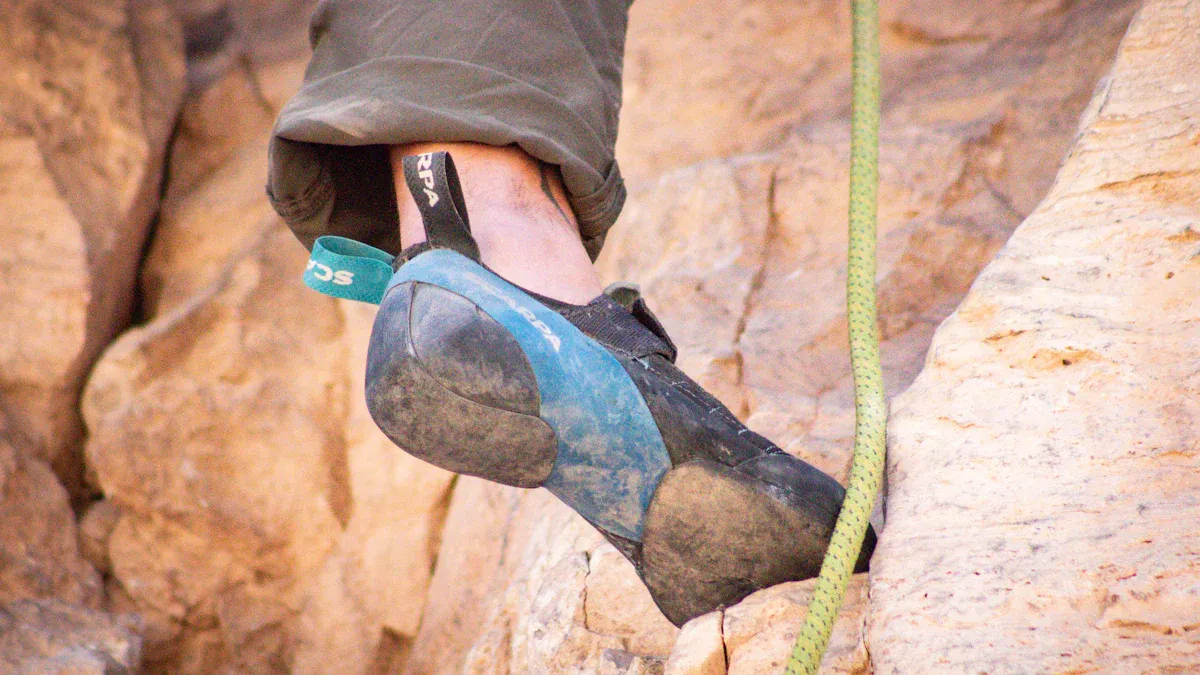
Climbing disciplines vary significantly, and each demands specific fabric properties from apparel. Climbers select materials that optimize performance and comfort for their chosen activity.
Sport Climbing Fabric Needs
Sport climbing prioritizes comfort and flexibility. Climbers choose lightweight, moisture-wicking materials that allow a full range of motion. Apparel must accommodate bending, reaching, twisting, and contorting without restriction. Fabrics that wick moisture away from the body keep climbers dry and comfortable.
Stretch is essential for flexibility. Spandex (Lycra, elastane) or mechanical stretch provides this. Spandex adds comfort and flexibility for movements like heel hooks and mantels. Mechanical stretch dries faster but offers less stretch than spandex. Woven fabrics are more durable than knitted fabrics. Single weave fabrics, which look and feel the same inside and out, suit lightweight synthetic pants. Double weave fabrics have a softer, open weave inside and a tighter, smoother outside. This design helps wick moisture away and provides slight warmth. Spandex absorbs moisture, so higher percentages can slow drying time. Double weave fabrics move moisture to the outside faster, keeping the wearer drier. Moisture-wicking properties are generally preferred. Woven fabrics are more wind and water-resistant. They also hold a Durable Water Repellent (DWR) finish better and longer than knitted leggings. Many high-quality stretch woven fabrics for climbing pants include a DWR finish.
For sport climbing, agility is key. This requires tight-fitting, elastic climbing pants that allow free movement. Overall, climbing pants should be stretchy, robust, and durable. They often feature reinforced areas on knees and the bottom for increased lifespan. Breathability is also crucial to prevent overheating. Stretchy and synthetic fabrics are valued for their flexibility and durability. Synthetic fibers are less absorbent, quicker to dry, and more breathable, making them excellent for moisture management. Recommended fabric types for sport climbing pants include spandex for elasticity, a mix of viscose and polyester for softness and stretch, and a combination of polyamide and spandex for a super lightweight feel. Softshell material is also recommended for alpine climbing due to its wind- and water-repellent properties, lightweight nature, and quick-drying capabilities.
Trad Climbing Fabric Needs
Trad climbing often involves longer days and more varied conditions, demanding versatile apparel. Climbers need layers that provide warmth, protection, and freedom of movement. Fleece jackets are popular for their lightweight nature, heat insulation, breathability, and quick-drying properties. They often utilize specialized knits like Polartec® for enhanced performance. Hoodies, while stylish, are practical for climbing. They typically feature a blend of cotton and synthetic fibers for comfort and quick-drying functionality. Mid-layer jackets, often fleece or engineered synthetics, offer warmth and moisture-wicking.
Climbing jackets include waterproof hardshells with GORE-TEX Infinium. These offer wind and waterproofing with maximum breathability. Softshell jackets provide freedom of movement, breathability, and wind-repellency for milder conditions. Climbing pants prioritize durability and freedom of movement. For climbing tops, breathability and moisture-wicking are key. Materials often blend cotton and synthetic fibers like polyester or nylon. Some incorporate technologies like HeiQ Fresh for odor reduction and temperature regulation. A typical trad climbing kit includes a non-cotton base layer (e.g., sun hoodie), a fleece mid-layer, a rain or wind shell, a down jacket for bivvying, regular climbing pants, a hat, and thin gloves for morning starts. These best fabric choices for climbing apparel ensure comfort and safety on multi-pitch routes.
Bouldering Fabric Needs
Bouldering requires apparel that maximizes free limb movement and suits the climbing center's temperature. Climbers avoid clothing with loops or wide openings that could get caught on grips. For optimal freedom of movement, especially for wide split motions, climbers look for leggings or trousers with a crotch gusset. Some ready-to-wear climbing pants feature gussets extending to the knees for non-stretch fabrics.
Bouldering apparel needs to be highly elastic, abrasion-resistant, thermal regulating, anti-odor, highly breathable, and lightweight. Four-way stretch is crucial. For bouldering shorts, a stretchy and quick-drying material is recommended. Flexibility is essential for maximum freedom of movement, allowing for ambitious moves and a full range of motion. Breathability manages sweat and heat, preventing fabric from clinging uncomfortably. Durability ensures clothing resists ripping and fraying from contact with rock. Lightness conserves energy, making the climbing process easier. Moisture-wicking removes moisture from the skin. Quick-drying eliminates the need for spare clothes. Hard-wearing fabrics prevent ripping on contact with rock and protect skin from scrapes.
Several advanced fabrics meet these demands:
| Fabric Name | Composition | Key Properties |
|---|---|---|
| ZERO SHEDDING FLEECE (SHEICO Group) | 43% Polyester, 50% recycled Polyester, 7% Recycled Spandex | Warm, thermoregulating, anti-bacterial, anti-odor, stretch, Bluesign, recycled |
| 9963 WINTER 3 DYN. BIO PRIMALOFT (Itttai S.r.l) | 100% Polyester | High breathability, contains biodegradable Primaloft yarn, high abrasion, quick dry, UV Cut 50+, waterproof & breathable, windproof, biodegradable |
| E33891000 (Trans-Textil GmbH) | 18% Elastan/Spandex, 36% Polyurethane, 46% recycled Polyamide | 4-way recycled/highly elastic, abrasion resistant 3D zones, highly breathable areas, knit fabrics, quick dry, stretch, waterproof & breathable, windproof, fluorocarbon-free repellent, recycled |
| COMFORTEMP® FLEXX PADDING (Freudenberg) | 3% Polyester, 97% recycled Polyester | Adaptive thermo-regulative performance, stretch, thermo-regulation, waterproof & breathable, recycled |
| LEW93013 (Aesthetictex Inc.) | 100% bio-based Nylon, 80% recycled Polyamide, 20% recycled Polyester | Eco melange pique woven laminate, water column of 10000, breathability of 10000 g/m²/24h, downproof, high abrasion, UV Cut 50+, waterproof & breathable, windproof, biodegradable |
| 442 NORWAY (Carvico) | 16% LYCRA®, 84% recycled Polyamide | Brushed ECO-performance fabric, anti-bacteria treatment, anti-odor, heating, high abrasion, stretch, thermo-regulation, recycled |
| LNT-20085-196 (Long Advance Int. Co., Ltd.) | 14% Elastan/Spandex, 9% Polyamide, 77% recycled Polyamide | Graphene for 20% stronger thermal regulation, longer cooling/rapid warm, high abrasion, stretch, thermo-regulation, Bluesign, fluorocarbon-free repellent, recycled |
| ANTON (IBQ Fabrics) | 14% Elastan/Spandex, 86% recycled Polyamide | Lightweight, 4-ways stretch, suitable for abrasion resistant pants, high abrasion, stretch, Bluesign, fluorocarbon-free repellent, recycled |
| P-1651 (Antex) | 60% organic Cotton, 40% recycled Polyester | YARNAWAY™ for accelerating biodegradation, biodegradable, recycled |
| 633-8671 (drirelease / OPTIMER) | 12% Hemp, 88% recycled Polyester | Natural engineered blend of fibers, non-chemical wicking and fast drying technology, anti-odor, high abrasion, printable, quick dry, thermo-regulation, recycled |
Alpine and Ice Climbing Fabric Needs
Alpine and ice climbing present some of the most demanding environments for apparel. Climbers face extreme cold, high winds, precipitation, and abrasive surfaces. Therefore, fabric choices become paramount for safety, performance, and survival. The best fabric choices for climbing apparel in these disciplines prioritize robust protection, efficient thermal regulation, and unhindered movement.
Alpine climbing apparel requires fabrics that offer exceptional wind and water protection. High mountains often experience strong winds, necessitating materials that effectively block wind penetration. Waterproof layers are crucial where temperatures fluctuate around freezing, as melting snow and ice can quickly lead to hypothermia. Fabrics must also allow a large range of motion without wasting energy. Some soft-shell pants, for example, require significant stretching, which can hinder movement. Clothing must keep climbers warm even when wet and dry quickly. Synthetic items generally dry fastest, though variations exist; polyester dries faster than nylon. Specific fabric examples include Micro Puff, which uses fast-drying synthetic insulation, and synthetic fibers like polyester, preferred over nylon for quicker drying.
A comprehensive layering system is essential for alpine climbing. Climbers often start with a synthetic base layer to retain heat in cold conditions. A softshell mountain pant, made from durable fabric, provides protection in snow, ice, and rock environments, offering additional durability and good movement. For outer protection, stormshells (hardshells) utilize GORE-TEX Pro 80D fabric. This material offers total protection and mobility in harsh conditions, resisting abrasion and cuts. Insulated pants feature WINDSTOPPER® shell fabric, which resists wind and snow while enhancing thermal efficiency. Heavyweight wool socks are ideal for warmth because wool retains heat even when wet. For warmer approaches, a synthetic sun hoody provides a lightweight, breathable layer and protects against UVA rays in snow. A grid-backed fleece, such as Polartec® grid-backed fleece, breathes well and adds warmth. Mid-layer insulation often consists of synthetic jackets that breathe flawlessly for colder weather and high-output activities. An insulated vest, made from synthetics or down, works well for core insulation without adding bulk to sleeves. Finally, a windshell or softshell jacket provides a light, durable layer to block high winds and offers warmth when a fleece alone is insufficient.
Ice climbing demands a similar, highly specialized approach to fabric selection, focusing on protection from melting surfaces, icy mist, and falling chunks of ice.
| Layer | Recommended Fabrics | Properties | Avoid |
|---|---|---|---|
| Base Layer | Synthetic materials, specialized thermal fabrics | Moisture-wicking, breathable, quick-drying, insulating (without trapping moisture) | Cotton (holds moisture, leaves you cold) |
| Mid Layer | Fleece, lightweight insulated jackets | Warmth without stiffness/bulk, flexibility, full range of motion | Stiff or bulky materials |
| Outer Layer | Waterproof, windproof, durable materials | Protection against melting surfaces, icy mist, falling chunks | N/A |
Base and mid-layers should consist of the same material to prevent restricting breathability and trapping moisture. Merino wool is often considered warmer and dryer than synthetic materials for these layers. For the base layer, synthetic materials or specialized thermal fabrics effectively wick moisture, breathe, dry quickly, and insulate without trapping moisture. Climbers must avoid cotton, as it holds moisture and leaves them cold. Mid-layers, such as fleece or lightweight insulated jackets, provide warmth without stiffness or bulk, ensuring flexibility and a full range of motion. Stiff or bulky materials hinder movement. The outer layer requires waterproof, windproof, and durable materials to protect against the constant exposure to melting ice, icy mist, and potential falling ice chunks.
Selecting the right climbing apparel fabrics is crucial for comfort, performance, and safety on the rock. Climbers should prioritize synthetic blends for their superior durability and moisture management. These fabrics tend to wick moisture better and dry faster, offering more durability and stretch. Alternatively, merino wool provides natural temperature regulation and odor resistance. Its unique fiber structure traps air, keeping climbers warm in cold conditions and cool in warmth. Merino wool also absorbs significant moisture without feeling damp, maintaining a stable body temperature. Always consider the specific demands of your climbing discipline and avoid cotton for active climbing.
FAQ
Why should climbers avoid cotton apparel?
Cotton absorbs sweat and dries slowly. This leads to discomfort and can cause hypothermia in cool conditions. It also loses insulating properties when wet. Climbers need fabrics that manage moisture effectively.
What makes synthetic fabrics ideal for climbing?
Synthetic fabrics like nylon and polyester offer superior durability, moisture-wicking, and quick-drying properties. They provide essential stretch for movement and maintain performance in various conditions. These materials are also lightweight and easy to care for.
How do fabric blends enhance climbing apparel?
Fabric blends combine different fibers to optimize performance. For example, nylon/spandex offers durability and stretch. Merino wool/synthetic blends provide natural temperature regulation with enhanced durability and faster drying. Blends create balanced, high-performing garments.
Which fabrics offer the best durability for climbing?
Nylon, especially Cordura and Ripstop variations, provides excellent abrasion resistance and tear strength. Tightly woven fabrics also enhance durability. Advanced fibers like Dyneema offer exceptional strength against tearing. These materials withstand harsh rock contact.